
Little Miss Muffet

Drooping over my half-filled shopping cart in a tortured and relatable supermarket patron posture, I trudged toward an almost empty checkout line.
I’ve been experiencing a profound bout of spiritual, professional, and constitutional dysphoria, and when this happens, cooking is my only way out.
Earlier that day, in a fit of spring-cleaning desk organization, I had unearthed a *superfun recipe booklet from a make-your-own-mozzarella-cheese kit I’d ordered years ago. *Superfun in that the informational content was printed in a bubble font with stars, hearts, and winged cartoon cows flying in the margins of each page. I remember the deep humiliation I felt as a 46-year-old chef when I could not, in fact, make cheese from this patronizingly fundamental kit.
Sitting at my half-clean desk, cheesy booklet in hand, I could still taste the decade-old disappointment of citric acid and rennet-blended white liquid, unwilling to curdle, thicken, or turn into anything other than hot fucking milk. You can hear… it’s still with me.
So, I set my sails to right this wrong, and unpasteurized, non-homogenized organic milk became my day’s priority.
My phone had lured me to a Washington State country store with promises of farm stand produce and unprocessed dairy products.
The store’s gambrel roof and large wooden bushels of vegetables gave me hope, but the farm-fresh produce, boasted about online, bore a striking resemblance to the tasteless veggies in my local Safeway. No way, they have Driscoll’s berries here! I’ve been looking for more plastic clamshells to throw into a landfill!
I think “Private Equity Farm-Fresh” should be a legally required market adjective.
I tossed some green items (sans Driscoll’s berries) into my cart to justify the schlep and located an unprocessed milk that would work perfectly.
The checkout guy was a skinny, slouching, older, grey-haired man who shot me an I’m on a sinking ship look as I wheeled toward him.
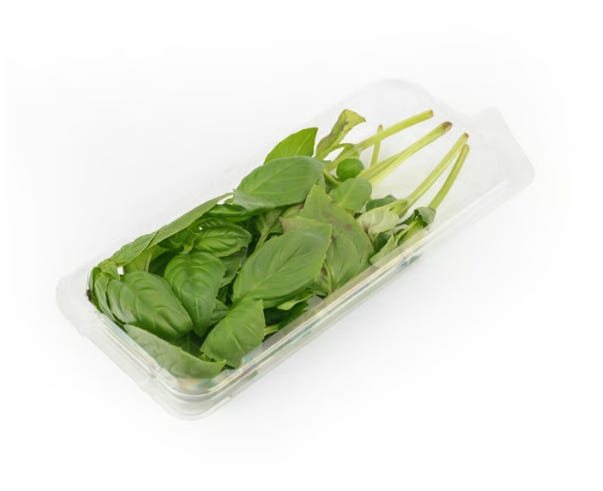
“Um, let me just double-check the price on your [clamshell of] basil.” It was $8.58 for a tiny package, which is robbery any way you chiffonade it.
He found that it was correctly priced and shrugged with his eyebrows and shoulders in a way that made me codependently tell him it was ok, even though it wasn’t. The vat-pasteurized, non-homogenized organic milk was $9 for a half-gallon. But… cheese. CHEESE. You can make it!
Cooking is incredibly personal to me. Not cheffing: cooking. It’s so intimate that I’m often afraid to talk about it for fear that my relationship with the food I cook will suffer. It’s not trivial or performative. It’s sacred. I feel the world disappear when I start to cook. I feel a better, truer person rise up. I’m the me-ist me I can be when I’m standing over a hot stove transforming elements into a completely new substance. I am Doctor Frankenstein! I am Prometheus!!! I am GOD ALMIGHTY!!!
Too much? I know. It’s heady. This is why I keep it to myself. It’s an addiction, and not one I’m looking to quit.
This mozzarella voyage felt like a spiritual completion, necessary to heal my feelings of 2026 compartmentalization of passion. I drove away from the farm stand, bubbling with the feeling of possibility.
Back at home, I cross-referenced the kit’s instructions with a few reliable online resources to make sure I was ready. I had citric acid, like any good chef does, which I would mix into the milk first, and a package of dried rennet tabs, which I bloomed in some water. I had a non-reactive pot on the stove, thermometer in hand, this that and the other thing, I was ready.
Heat slowly, not too hot, stir in, mix gently, now add this, stir for 25 seconds, lid on, now wait…
I sat in the living room looking to the sky, waiting for the shift to occur. The instructions said the curds would pull gently inward away from the whey at the sides of the pot. Timer BING!
The milk… this prized, pure, beautifully unhandled juice of cow… would not change into anything other than hot milk.
I gave it more time… a desperate addition of acid. Nothing. Nothing.
There’s this girl I know. She’s about 6, looks surprisingly familiar, and she always shows up when my life goes sideways. She cries big, wet tears, knows all the nastiest words, and stomps her feet so hard that the cupboards rattle. Francis knows her, not very well, luckily, but he’s met her a few times. He came out of his office to find me her wailing over the hot pot of defeat.
“It didn’t work at all!” I followed the directions exactly, and it still didn’t change!”
I frowned meanly at my consoling husband, who ducked back into his office. I wanted to be alone. I considered moving far away from everyone who knew me. I’d go to a small, expectationless, dairy-free island—Failurini!
But time, you know, time changes feelings. In minutes, my self-loathing downshifted into a workable offense as I cleaned the kitchen.
Popping out of his office, Francis said, “I think the issue is the kind of rennet you’re using!” My wonderful and terrified husband suddenly had a horse in the cheese race, even though he is a dairy-free dude. “I just watched a bunch of cheesemaking videos, and a lot of people say you have to use liquid animal rennet. Dried rennet isn’t strong enough to set the milk. They sell it at brewery-supply stores. I called one in Vancouver (Washington), and they’ve got some.”
He’s amazing.
With gas over $5/ gallon, I wasn’t going to drive back up to Washington, and ordered the rennet online.
The next morning, after the rennet arrived, I set out to our local Whole Foods to see if they had any unpasteurized milk. They had exactly the same brand as the farmstand! It was the only vat-pasteurized, non-homogenized milk I could find, so I spent a small fortune on 2 bottles, just in case something weird happened. I also picked up some fresh citric acid in case that was the problem. I watched the same videos Francis had, as well as a few others, and read online tips and FAQs.
I normally follow a half recipe, half intuition model for cooking, but this was no place for divination. With my laptop on my kitchen counter, I mirrored the cheesemaking video play-by-play. Now we’re adding the acid, now the heat, now the rennet, now the wait, now the lid.
Again, I sat in the living room, panting with anticipation, daydreaming about my teeth sinking into the soft, fresh cheese. Timer ding!
And…
N O T H I N G
I felt like the disappointment had liquified my bones. I transformed into a vat of emotionally bankrupt jelly on the couch. Even my inner 6-year-old was too overworked to tantrum for me.
Hours later, I used the rest of the milk to make homemade ricotta, which tasted like inertia, but curdled just fine.
So I have no recipe or story of victory through suffering in this month’s blog post. I do have some liquid animal rennet available for anyone interested. All I ask from you, my friends, is that if you have tips or a recipe for homemade mozzarella… keep it to yourself.
This is exactly what I needed today. A good laugh about the trials of being an artist. Which you are. ♥️Mom
Alison— this is terrific storytelling( I laughed; I felt your pain). Now I know for sure that I won’t ever attempt to make cheese. Gotta love those cheese makers who provide us with such wonderfulness.
❤️